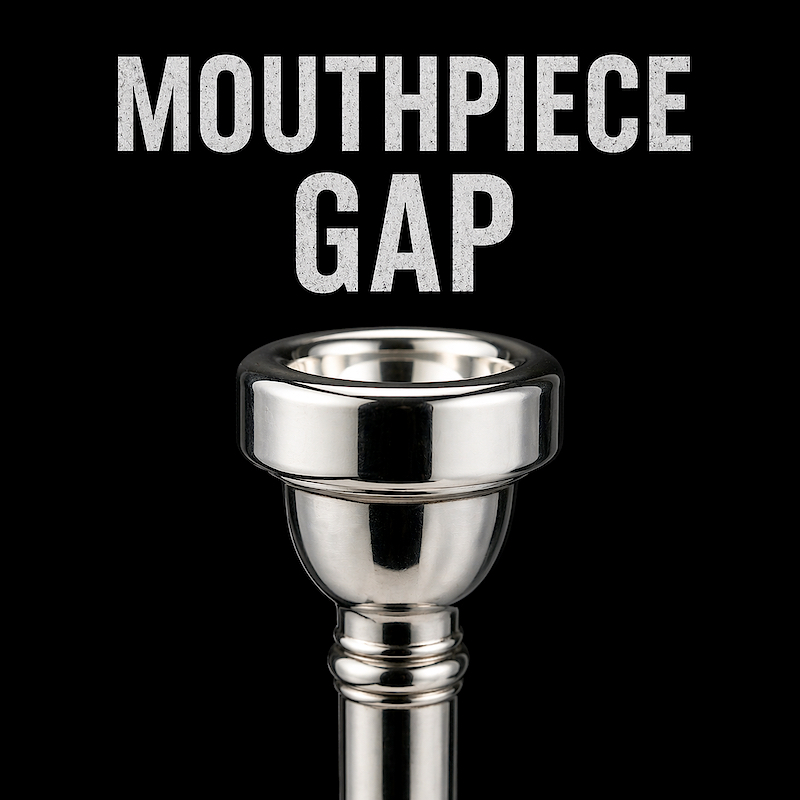
I have been searching for years trying to find a lead horn that felt exactly right. I would try different models, and inevitably, they would feel mushy or just wouldn't slot the way I needed them to. I often wondered why my beloved Schilke B1 was so perfect, and why I missed the feel of it so much when playing other setups. It turns out, the horn wasn't the problem. It was the gap. All this time, it was my custom Schilke 12A4a mouthpiece—with its specially designed backbore that just feels right to me—causing the issue because of its extra-long shank design. Treating the trumpet as a discipline rather than a mystery requires us to take a real-world approach to the hard acoustics of our equipment. When you mix and match brands, you are dealing with highly specific pieces of hardware that do not naturally align. If you've been playing lead and things just don't feel right, you need to look at the physical relationship between your mouthpiece and your trumpet receiver. Here is the mechanical breakdown of what happens when you pair a Schilke mouthpiece with two legendary lead horns, and how to fix it. When matching a Schilke mouthpiece to a vintage Calicchio trumpet, you are forcing together two pieces of gear with opposing dimensions. In most cases, there is no gap. Because of the unique dimensions of a Schilke shank, inserting it into a standard Calicchio receiver almost always results in the mouthpiece bottoming out against the leadpipe. This creates a "zero gap" scenario that actively harms the playability of the horn. To a machinist, two pipes touching flush might seem like a perfect fit. But whether you are building a symphonic engine or dialing in lead scalpel endurance, a zero-gap fit is an acoustical nightmare. A standard gap (optimally between .060 and .100 inches) creates a necessary, microscopic disruption in the air column. This node is critical for proper resistance, intonation, and secure slotting. When you have a zero gap, you experience: When pairing a Schilke with a Yamaha Bobby Shew lead trumpet (like the YTR-8310Z or ZII), you run into a similar dimensional clash, but with a different acoustical penalty. There is almost certainly a gap issue. While the taper will engage the receiver walls, the extra-long Schilke shank pushes much further into the Yamaha receiver than intended. You will end up with an excessively tight "micro-gap" or bottom out entirely against the leadpipe. The Bobby Shew model is incredibly lightweight and designed to be highly responsive with a specific resistance profile. Messing up the gap on a Z is immediately noticeable: If you are committed to the Schilke rim and cup, you do not have to give it up. You just have to physically recreate the gap so the horn slots correctly. If you are struggling with a setup that feels like it's fighting you, don't assume it's your playing. Check your gap. It isn't magic—it's just physics!
Case Study 1: Schilke 12A4a and the Calicchio
The Short Answer
The Mechanics: Why It Bottoms Out
The Acoustic Reality of a "Perfect Fit"
Case Study 2: Schilke 12A4a and the Yamaha Bobby Shew Lead
The Short Answer
The Mechanics: The Z and the Schilke
The Acoustic Reality on the 8310Z
The Real-World Solutions: How to Correct the Match