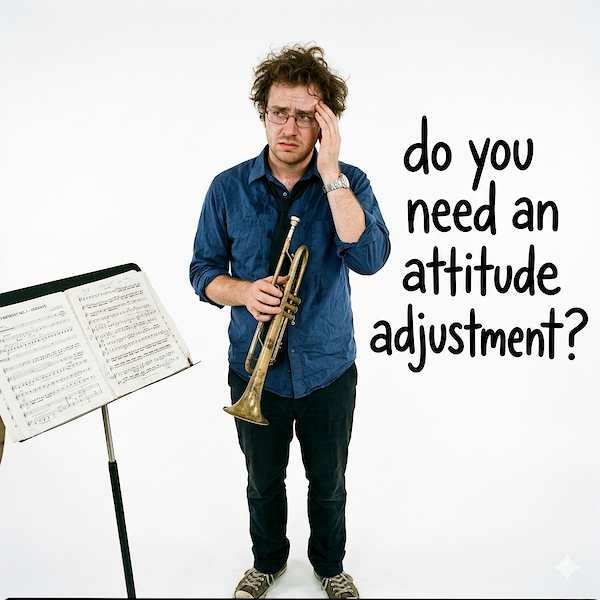
Musicians are, without a doubt, an unusual lot. We spend thousands of hours isolated in practice rooms, staring at walls, obsessing over microseconds of timing, minute shifts in air pressure, and the exact placement of our fingers or embouchure. We wire our brains differently to process abstract audio signals into physical, muscular actions. It is a beautiful pursuit, but let’s be honest: it does not always make for the most socially well-adjusted individuals. Oftentimes, musicians come across as socially awkward. Sometimes, without necessarily trying to be rude, we end up acting exactly that way. We can be hyper-critical, overly sensitive, defensive, or simply detached from standard conversational norms. But while your technical facility and artistic expression are what get you in the door, your ability to effectively communicate with other musicians, bandleaders, contractors, and managers is what keeps you in the room. Learning how to navigate the complex social dynamics of a stage, a studio, or a tour bus is a crucial, non-negotiable skill. Today, we are going to explore the proper mindset needed for a long-lasting, sustainable musical career. It is time to look in the mirror and ask the hard question: Do you need an attitude adjustment? For decades, the music industry romanticized the "tortured genius" or the "brilliant jerk." We all know the stories of legendary bandleaders who threw chairs, or virtuoso soloists who berated their rhythm sections, or lead players who demanded the world bend to their whims because they had the chops to back it up. Here is the reality of the modern music business: Nobody has time for that anymore. The industry is saturated with incredible players. If you are difficult to work with, constantly complaining, or unable to communicate respectfully, a contractor or bandleader will simply move down the call list. They will happily hire a player who plays at 90% of your technical ability but is 100% easier to be around. Bad attitudes usually stem from insecurity, immense pressure, or a fundamental misunderstanding of what a professional music gig actually is. A gig is not a recital to prove your worth to the world; it is a collaborative job where you are providing a service. Recognizing this shift from "artist performing" to "professional serving the music" is the first step in adjusting your mindset. The most immediate social circle you deal with is your fellow musicians. Whether you are sitting in a symphony section, playing in a five-piece wedding band, or tracking in a studio, the way you interact with your peers dictates the quality of the music. Musicians tie an extraordinary amount of their personal identity and self-worth to their instrument. When someone suggests a different phrasing, points out an intonation issue, or asks you to lay back, the knee-jerk reaction is often defensive. It feels like a personal attack. An adjusted attitude recognizes that the music is bigger than the individual. When the lead player asks you to match their articulation, it is not a critique of your fundamental playing style; it is a necessary adjustment to make the section sound like a single, cohesive engine. Mistakes happen. Entrances are missed, key signatures are forgotten, and notes are chipped. When you make a mistake, the absolute worst thing you can do is glare at the sound guy, inspect your instrument as if it suddenly broke, or throw a fellow musician under the bus. Own it. A simple nod, a raised hand, or a quiet "my bad" during a break speaks volumes about your character. It shows your peers that you are self-aware, accountable, and secure enough in your abilities to admit a fault. Unless you are the designated musical director or the section leader, be incredibly careful about giving unsolicited advice. Telling the bass player that they are rushing the chorus, or telling another horn player how they should navigate a technical passage, is a quick way to build resentment. If something is truly derailing the performance, bring it up constructively, phrased as a question rather than a directive: "Hey, are we all feeling that chorus a bit on top of the beat, or is it just my monitor?" If fellow musicians are your co-workers, bandleaders, contractors, and managers are your bosses. Their perspective is entirely different from yours, and failing to understand what they need is the quickest way to find yourself out of a gig. A bandleader’s primary goal is to deliver a great product to the client, whether that client is a bride, a club owner, or a festival promoter. They are managing logistics, setlists, client expectations, and putting out fires you never even see. What does a bandleader want from you? Zero friction. They want you to: * Show up early: If you are on time, you are late. * Be completely prepared: Know the book. Do not use the rehearsal to learn your part; use the rehearsal to learn how your part fits with everyone else. * Have working gear: A professional does not hold up a soundcheck because they forgot a cable, need a reed, or have a valve sticking. Your equipment is your responsibility. * Be a positive presence: Complainers are exhausting. If the green room is small, the monitors are muddy, or the catering is subpar, keep it to yourself. Griping to the bandleader only adds to their stress. When a manager or director gives you feedback, your only response should be variations of "Got it," "Understood," or "I can make that adjustment." Do not argue about the historical accuracy of a chart. Do not explain why your way is theoretically superior. If the musical director wants it played a certain way, play it that way. You are being paid to execute their vision. Treating your role as a discipline rather than an opportunity for debate is the hallmark of a seasoned pro. Why do we get defensive? Why do musicians, who are fundamentally in the business of creating harmony, so often create interpersonal dissonance? It usually comes down to the isolation of practice versus the vulnerability of performance. We spend years alone, building our technical foundation, striving for an unattainable perfection. When we finally step out into the real world, the variables are out of our control. The acoustics are weird, the monitor mix is terrible, the charts are written in a microscopic font, and we are tired. Under stress, our default social coping mechanisms kick in. For some, that means shutting down and becoming uncommunicative. For others, it means becoming loud, boastful, or hyper-critical to mask insecurity. To truly adjust your attitude, you must learn to separate your personal value from your musical output. You are a human being who happens to play an instrument. If you have a bad night, you are not a bad person. If a gig goes poorly, it is a data point to learn from, not a definitive judgment on your soul. When you decouple your ego from your playing, you become remarkably easy to work with. You can take criticism without flinching. You can laugh at a mistake. You can appreciate a colleague's incredible solo without feeling jealous. You transition from a state of constant self-preservation to a state of musical generosity. If you are reading this and realizing that perhaps your attitude could use a tune-up, do not panic. Attitude, much like technique, is a habit. It can be practiced, refined, and improved. Here is how you build a bulletproof, professional mindset. Even if you are the star soloist, adopt the mindset of a sideman. A great sideman is there to make everyone else sound better. They listen more than they play. They support the melody, lock in with the rhythm section, and serve the song. When you walk into a room with the intention of making the people around you look and sound great, your entire demeanor shifts. Treat text messages, emails, and phone calls with contractors as formal business correspondence. * Respond promptly: Do not leave contractors hanging. If they offer you a gig, reply immediately, even if it is to say you need to check your calendar. * Be clear and concise: Avoid long-winded excuses. * Say "Thank You": It sounds remarkably simple, but thanking a bandleader for the call or thanking the sound engineer for their work goes an incredibly long way. A bad attitude is often just a symptom of exhaustion or burnout. Playing high-level gigs requires stamina. If you are constantly rolling into rehearsals on three hours of sleep, fueled by bad food and stress, you are going to be irritable. Treat your body like the machine it is. Proper rest, hydration, and maintaining your daily warm-up and practice routines are vital. When your fundamentals are solid and your physical endurance is high, you have the mental bandwidth to handle social friction gracefully. Try to view the gig from everyone else's perspective. * The sound engineer is dealing with a room that echoes like a cavern and a bass amp that is too loud. * The wedding planner is trying to coordinate a drunk bridal party and a delayed catering schedule. * The singer is fighting a cold. When you realize that everyone is fighting their own battle to make the event a success, you stop viewing inconveniences as personal slights. Empathy diffuses anger and frustration faster than anything else. The music scene in any town, no matter how large, is incredibly small. Everyone knows everyone, and word travels fast. Never speak ill of another musician, contractor, or venue on a gig or on social media. Venting might feel good in the moment, but the reputation you build as a complainer will outlast the memory of whatever frustrated you. Be known as the person who is a joy to have on the gig, the one who brings good energy to the green room. Ultimately, a lifelong career in music is not built entirely on how fast you can play or how high your range extends. It is built on relationships. It is built on trust. Contractors hire people they trust to get the job done without creating headaches. Bandleaders keep players who make the ensemble feel unified. Your peers will recommend you for gigs not just because you have great chops, but because they actually want to spend four hours in a car with you driving to the venue. Your attitude is the lens through which your talent is viewed. A bad attitude can obscure world-class playing, while a fantastic, supportive, and professional attitude can elevate a solid player into a highly sought-after, constantly working musician. Take a hard look at your interactions. Are you treating the gig, your peers, and the music with the respect they deserve? Are you bringing baggage into the rehearsal room? Are you communicating clearly, respectfully, and professionally? The instrument is a discipline. Playing it well requires daily, relentless focus. But surviving and thriving in the music business requires a different kind of discipline: the discipline of the mind. Check your ego, practice empathy, show up prepared, and watch how quickly your career—and your enjoyment of the music—transforms.
The Myth of the "Brilliant Jerk"
Communicating with Fellow Musicians: The Section Dynamic
Leave the Ego at the Door
The Art of Saying "My Bad"
Unsolicited Advice is Rarely Welcome
Navigating Leadership: Bandleaders, Contractors, and Managers
Make Their Job Easier
How to Take Direction
The Psychology of the Musician's Attitude
Separating Yourself from the Instrument
Building the Bulletproof Mindset: Actionable Steps
The Long Game: Relationships as the Ultimate Currency