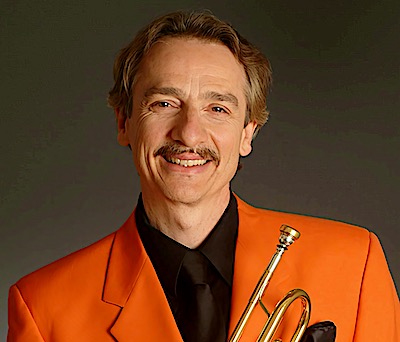
The goal of technique is to be able to express the music without physical limitations.
Allen Vizzutti
Trumpeter
The goal of technique is to be able to express the music without physical limitations.
Allen Vizzutti
Trumpeter

You need the glorious high notes for the processional, but you also need to survive the reception. Play brilliant arrangements with smart resting points written right in.
Save Your Chops Double Tonguing and Single Tonguing
The key to greatness is PATIENCE.
Can you WORK in a calm methodical fashion?
Can you be patient enough to allow yourself time to DEVELOP SKILLS and PRACTICE?
This information is truly the greatest gift. This is a process you can do with all of your music, begin working passages, exercises, pieces in a slow methodical manner. As you work the piece, you should also concentrate on the correct sound, timbre, tonguing, phrasing and musicality. After 10 or more repetitions of playing just 2-3 measures perfectly, increase the speed one metronome marking. THIS WILL MAKE YOU A BETTER PLAYER, FASTER! Can you be patient AND do the work?
To those of you that go for walks, I have the best-kept secret. Walking in a steady tempo is perfect for practicing tonguing! REMEMBER patience. For the first week of walking, each step should be a double tongue syllable. Step 'Ti' Step 'KA' Step 'Ti' Step 'KA' etc… IDEALLY, if you could do this for two weeks it would be FANTASTIC! (Think you can?) You want to be sure to clearly enunciate each syllable, a sharp 'Ti' and an equally clear 'KA' THAT's ALL and enough!!!!
The third week (You did do two weeks of 'Ti' and 'KA' RIGHT?) you should begin to combine the two. We walk at approximately 84 Beats Per Minute. This is a great starting tempo for double tonguing. Again, not in a hurry, but taking the time to practice and develop the skills, slowly and clearly say 'Ti - KA' to EACH step. Do this for THREE weeks. The rhythms need to be clean and precise, there should be NO difference between the 'TI' or 'KA'
AFTER FIVE WEEKS, of skill building now you can play popular double tonguing books and gradually increase the speed. FOR THE BEST RESULTS, go back to the third week exercises and practice slowly, cleanly and clearly.
If you are willing to DO THE WORK and be PATIENT you will succeed at double tonguing in just a few months!
Syllables For Single Tonguing TA, TEE, TOO, DA, DEE, DO
Syllables For Double Tonguing TI-KA, TA-KA, DA-KA, TEE-KEE, DEE-KEE
Or combinations from single tonguing syllables with a 'KA' or 'KEE' ending.
Tonguing is a crucial aspect of playing the trumpet, as it determines the articulation of notes and the overall sound produced. It refers to the technique of interrupting the airflow from the lips to produce distinct, separate notes. Proper tonguing is essential for clear and precise playing, and there are several methods that can be used to achieve this.
The first and most common method of tonguing is the “T” or “K” tonguing. This involves using the tongue to interrupt the airflow from the lips, producing a sharp, crisp sound. To execute this method, the player must form the tip of their tongue into a flat shape, similar to the shape of the mouth when saying the sounds “T” or “K”. This tongue shape is then used to interrupt the airflow, producing a clear and distinct note. This method is suitable for most playing situations and is widely used by trumpet players of all levels.
Another common method of tonguing is the “Double” or “Double-tonguing” technique. This method involves using two separate tongue movements to produce two distinct notes in rapid succession. To execute this technique, the player must first form the tip of their tongue into a flat shape, similar to the “T” or “K” method. Then, they must quickly switch to a different tongue shape, such as the “T” or “K” shape, to produce the second note. This technique is often used for fast or virtuosic passages, where a quick and clear articulation is required.
The “Flutter” or “Flutter-tonguing” method is another popular technique that is used to produce a unique sound. This method involves rapidly flicking the tongue against the roof of the mouth, producing a rapid, “buzzing” sound. To execute this technique, the player must first form the tip of their tongue into a rounded shape, similar to the shape of the mouth when making the sound “R”. Then, they must rapidly flick their tongue against the roof of the mouth, producing a continuous, buzzy sound. This technique is often used for special effects, such as imitating the sound of a bird or adding a unique texture to a musical passage.
In addition to these traditional tonguing methods, there are several other techniques that can be used to achieve specific sounds or effects. One such technique is the “Staccato” tonguing, which involves using a sharp and abrupt tongue movement to produce short, separate notes. This method is often used for musical passages that require a strong and articulate sound, such as in classical or orchestral music.
Another technique that can be used to achieve specific sounds is the “Legato” tonguing, which involves using a smooth and fluid tongue movement to produce long, connected notes. This method is often used for musical passages that require a smooth and lyrical sound, such as in jazz or blues music.
In conclusion, tonguing is an essential aspect of playing the trumpet, as it determines the articulation of notes and the overall sound produced. There are several methods of tonguing, including the “T” or “K” tonguing, the “Double” or “Double-tonguing” technique, the “Flutter” or “Flutter-tonguing” method, the “Staccato” tonguing, and the “Legato” tonguing. By mastering these techniques, trumpet players can produce a wide range of sounds and styles, and improve their overall playing ability. However, it is important to note that proper tonguing technique is not the only factor that affects the quality of trumpet playing. Other factors, such as breath control, embouchure, and overall musicianship, also play important roles in producing a great sound.
To develop proper tonguing technique, trumpet players must practice regularly and focus on their tongue placement and movement. They can begin by practicing simple exercises, such as playing single notes with different tonguing methods. They can then gradually increase the complexity of the exercises, playing scales, arpeggios, and other musical passages with different tonguing techniques.
In addition to regular practice, trumpet players can also benefit from studying with a qualified teacher or mentor. A teacher can provide guidance and feedback on tonguing technique, as well as other aspects of trumpet playing, and help the student develop a personalized practice plan that addresses their individual strengths and weaknesses.
Finally, it is important to remember that tonguing is just one aspect of trumpet playing, and should be approached in the context of overall musicianship. Great trumpet playing requires a combination of technical skill, musicality, and expression, and players must strive to develop all of these elements in their playing. With dedicated practice, a commitment to learning, and a focus on overall musicianship, trumpet players can develop great tonguing technique and achieve their full potential on the instrument.
© 2026 Copyrighted TrumpetStudio.com is a Division of Windy Town® at WindyTown.com